

Showing posts with label pets. Show all posts
Showing posts with label pets. Show all posts
Wednesday, March 5, 2014


Thursday, July 18, 2013
Dog Sitting
I've written multiple times about the many benefits of kids growing up with dogs and pets in general. After our dog died just before the kids' second birthday, we decided we weren't ready for another mouth to feed and animal to train. So, what's the solution if we still want some of the benefits? We offer to watch the neighbor's dogs!
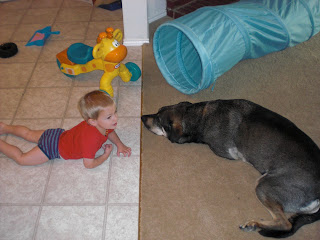
 Our neighbors actually have 3 dogs and we normally only watch Coco - seen above. She is older, great with kids, and doesn't require a ton of work. The kids love playing with her, feeding her, and running around.


Such a wonderful dog to put up with this!
This time we also agreed to watch their puppy - Jasper. I was impressed how well the puppy followed the directions of two year olds. The kids are the ones who got out the blanket and told the dogs to lay down. I wasn't surprised that Coco followed directions. But the puppy? That's impressive!
Tuesday, March 12, 2013
Visiting a Farm
My kids' Spring Break is the same as the immediate school district, but a week off from most of the other neighboring school districts. This means with a short drive, we can find great activities that aren't crowded. I love Spring visits to a farm and this seemed like a perfect time.


We started by feeding the goats. This was very exciting and resulted in lots of smiles, laughs, and "maaaaa"s.

My kids tried walking to a different part of the pen to feed other goats... this goat was not ok with that. haha

Big goats, little goats, many different colors of goats. Nothing could be better than feeding goats, except...

Feeding an outdoor guinea pig?

A tractor ride. Notice the way they look right into the camera ignoring the tractor to make the perfect photo. Yeah, right.

A maze? This is a great place to run!

I'm pretty sure this is the way out...

Maybe it's this way instead.
Then we went to see the farm animals you can't feed. Apparently this is a boy donkey. haha
Since the farm only had a three families visiting and no school groups, they let my kids each have another cup of feed and sent them back to the goats. It's like winning the lottery for two year olds.
Monday, August 20, 2012
Best Dog Ever!
I'm sure you are tired of my posts about the importance of kids having animals. This post is very different. We found out in May that our beloved dog had advanced cancer that we couldn't treat. We did everything we could to make him comfortable in his last few months.

He may be taller than her, but he still let her dress him up in costumes. Our kids had no concept of death and Rocky was always with us, so we knew this would be difficult. After much research, we decided to just answer their questions directly and with appropriate concrete language. Saying things like the dog has "passed away" or that he is "in a better place" or that we "put him to sleep" doesn't make any sense to a toddler.
We did change our language about when we took Rocky to the doctor. We stopped referring to him as sick because we didn't want them to think every time someone gets sick that they die. They did see the many pills we were giving him every day and knew we were trying to make him feel better. They also couldn't miss the many vet appointments. They knew something was wrong, but didn't realize how bad it was. They did like that toward the end Rocky wore a diaper at night just like they do. It's good to find a silver lining. haha

When the time finally arrived we had someone come stay with the kids while we took Rocky to the vet. My husband and I were with him and needed the time to compose ourselves before going home to explain it to the kids. When we walked in the door, the first thing sweet daughter said was "Where is Rocky?" We sat down on their level and told them that Rocky had died. We explained that he wasn't hurting any more and we wouldn't see him again. They ask many questions, but did seem to get it eventually. We answered their questions and we talk about Rocky any time they bring him up.

People want to know how long it takes for them to forget or stop asking. I'm writing this blog post a year later and can't answer it yet. They still remember Rocky and talk about him. If someone asks if we have a dog, sweet daughter will say, "Rocky died." She says it very matter of factly and even knows to give me a hug after (I tend to get upset still). In fact this week, we were doing dictation about car rides and she said her favorite person to ride in a car with was Rocky when we went to Oklahoma. That was literally a year ago and she still remembers.
Sweet son also remembers Rocky, but in a more concrete way. When he sees a big dog he will run up to it and say it's nice like Rocky. If a dog licks his face he will say it's like Rocky, etc.

He may be taller than her, but he still let her dress him up in costumes. Our kids had no concept of death and Rocky was always with us, so we knew this would be difficult. After much research, we decided to just answer their questions directly and with appropriate concrete language. Saying things like the dog has "passed away" or that he is "in a better place" or that we "put him to sleep" doesn't make any sense to a toddler.

We did change our language about when we took Rocky to the doctor. We stopped referring to him as sick because we didn't want them to think every time someone gets sick that they die. They did see the many pills we were giving him every day and knew we were trying to make him feel better. They also couldn't miss the many vet appointments. They knew something was wrong, but didn't realize how bad it was. They did like that toward the end Rocky wore a diaper at night just like they do. It's good to find a silver lining. haha

When the time finally arrived we had someone come stay with the kids while we took Rocky to the vet. My husband and I were with him and needed the time to compose ourselves before going home to explain it to the kids. When we walked in the door, the first thing sweet daughter said was "Where is Rocky?" We sat down on their level and told them that Rocky had died. We explained that he wasn't hurting any more and we wouldn't see him again. They ask many questions, but did seem to get it eventually. We answered their questions and we talk about Rocky any time they bring him up.

People want to know how long it takes for them to forget or stop asking. I'm writing this blog post a year later and can't answer it yet. They still remember Rocky and talk about him. If someone asks if we have a dog, sweet daughter will say, "Rocky died." She says it very matter of factly and even knows to give me a hug after (I tend to get upset still). In fact this week, we were doing dictation about car rides and she said her favorite person to ride in a car with was Rocky when we went to Oklahoma. That was literally a year ago and she still remembers.
Sweet son also remembers Rocky, but in a more concrete way. When he sees a big dog he will run up to it and say it's nice like Rocky. If a dog licks his face he will say it's like Rocky, etc.
Monday, July 11, 2011
Kids and Pets (part 2)
Since some new research has come out about the benefits of raising kids with pets, I thought I would revisit the subject.

As I mentioned in the last post about pets, children with pets have fewer allergies than those raised without them. The new research confirms that, but goes farther into looking at which specific allergens are impacted. Pet dander was an obvious one, but children raised with cats and dogs also were less likely to develop allergies to dust-mites, ragweed and grass. Having pets does not seem to impact food allergies.

I had also mentioned how pets teach children to be more caring and nurturing. The new research supports this and finds that children raised in a family with dogs and cats show the same signs of "advanced nurturing" as older children who have 3 or more younger siblings. This is demonstrated through understanding the feelings and thoughts of others, taking responsibility for caring for others, and anticipating the needs of someone else.


While there has been a lot of research showing animals comfort people, a new study has come out showing children raised with animals are less anxious, even in situations where the animal is not present. Children taking standardized tests show different levels of anxiety and while looking into different variables that could help this, they discovered that there was a direct correlation between lower anxiety and students with pets. Of course, correlation is not causation, so research will continue.

Having pets has also been proven to increase reading skills, including reading comprehension. This research has been done in many different studies. Some studied kids who have pets at home, divided by type of pet and a child's interaction with the pet. While cats and dogs were the most common, some kids with fish, rodents, and lizards also had a small benefit to their reading scores. The common factor seems to be how often the child talks or reads to their pet. Another study built off of this and tested if kids read to their stuffed animals if it would have the same impact. Unfortunately the answer was no. Apparently when reading to a live animal kids are more likely to correct themselves and explain the story and while reading to stuffed animals they often made up their own stories rather than reading the book. There have been other studies testing whether kids reading to a therapy dog outside the home would have the same positive effect. The answer is yes, but to a smaller degree. I know our local library has a Read to Rover program, so if you don't have a pet, feel free to look for similar free programs near you!


Petting the puppy
As I mentioned in the last post about pets, children with pets have fewer allergies than those raised without them. The new research confirms that, but goes farther into looking at which specific allergens are impacted. Pet dander was an obvious one, but children raised with cats and dogs also were less likely to develop allergies to dust-mites, ragweed and grass. Having pets does not seem to impact food allergies.

Both looking guilty
I had also mentioned how pets teach children to be more caring and nurturing. The new research supports this and finds that children raised in a family with dogs and cats show the same signs of "advanced nurturing" as older children who have 3 or more younger siblings. This is demonstrated through understanding the feelings and thoughts of others, taking responsibility for caring for others, and anticipating the needs of someone else.

It's not nice to pull hair.

He thinks he's a lap dog.
While there has been a lot of research showing animals comfort people, a new study has come out showing children raised with animals are less anxious, even in situations where the animal is not present. Children taking standardized tests show different levels of anxiety and while looking into different variables that could help this, they discovered that there was a direct correlation between lower anxiety and students with pets. Of course, correlation is not causation, so research will continue.

Clearly a part of the pack
Having pets has also been proven to increase reading skills, including reading comprehension. This research has been done in many different studies. Some studied kids who have pets at home, divided by type of pet and a child's interaction with the pet. While cats and dogs were the most common, some kids with fish, rodents, and lizards also had a small benefit to their reading scores. The common factor seems to be how often the child talks or reads to their pet. Another study built off of this and tested if kids read to their stuffed animals if it would have the same impact. Unfortunately the answer was no. Apparently when reading to a live animal kids are more likely to correct themselves and explain the story and while reading to stuffed animals they often made up their own stories rather than reading the book. There have been other studies testing whether kids reading to a therapy dog outside the home would have the same positive effect. The answer is yes, but to a smaller degree. I know our local library has a Read to Rover program, so if you don't have a pet, feel free to look for similar free programs near you!

Sweet puppy

He's looking back because she stopped petting.
Monday, March 7, 2011
Kids and Pets
We have a little puppy that is a huge part of our family. Ok, he may not look that little to you, but he is little to us. There are many benefits to raising kids with pets (preferably the furry kind). The biggest health benefit is a huge decrease in allergies and asthma. An increased immune system has also been proven in these kids.

We did a lot of research and met a few puppies before deciding this was our dog. We had both grown up with dogs and agreed we wanted a large dog. Small dogs typically bark or yip constantly and are more likely to bite young kids. Big dogs are typically quieter, gentler, and better suited to being around young children. We found our puppy in a shelter and he had a great disposition. He is not an alpha dog by any means and he has never shown food aggression.

There are many other lessons learned from having pets. How to be kind, gentle, and loving are all demonstrated in the home. Kids will confide in pets and this has been shown to increase self-confidence and self-esteem. They learn impulse control and can improve social skills. Something as simple as playing fetch teaches kids how to take turns and share.

An animal will teach natural consequences - if he doesn't want to be petted or played with he will just walk away. We are very lucky to have a dog that is great with kids. If they do something he doesn't like, for example pulling his ears, he will lick them in the face. This makes them let go and laugh. They stop pulling his ears and everyone is happy once again.

Children raised with animals also tend to get more exercise. Kids chase the dog around and play outside more often. Our dog requires a daily walk, which is always a fun time for our kids. We can't wait till they are old enough to walk it instead of getting to ride though!

Having a pet is also a good way to teach responsibility. Giving the dog food, water, and letting him outside are just the tip of the iceberg. Seeing the dog go to the vet, get medication, and shots also helps kids empathize with a shared experience.


Our sweet puppy

He's always around.

The boys (minus the husband)
An animal will teach natural consequences - if he doesn't want to be petted or played with he will just walk away. We are very lucky to have a dog that is great with kids. If they do something he doesn't like, for example pulling his ears, he will lick them in the face. This makes them let go and laugh. They stop pulling his ears and everyone is happy once again.

Just one of the pack
Children raised with animals also tend to get more exercise. Kids chase the dog around and play outside more often. Our dog requires a daily walk, which is always a fun time for our kids. We can't wait till they are old enough to walk it instead of getting to ride though!

Not the type of ride I meant...
Having a pet is also a good way to teach responsibility. Giving the dog food, water, and letting him outside are just the tip of the iceberg. Seeing the dog go to the vet, get medication, and shots also helps kids empathize with a shared experience.


Monkey see, monkey do
Subscribe to:
Posts (Atom)