You never know what kids are going to say. Here are 3 examples of conversations around our house.
Our 5 year old son just used the word
"extraneous" properly. That's one way to make sure your sister doesn't
understand you are insulting her...
Kid #1 "I know I'm sick, but can I still do piano practice?"
Me "If you want, you can."
Kid #2 "Do I have to do piano practice?"
Me "You aren't sick."
Kid #2 "I know, I just don't want to do it."
My kids are debating if they should yell at the tv while watching
sports. One says it's not logical because the people in the tv can't
hear us. The other says, "I can't help it. We might win!"

Showing posts with label TV. Show all posts
Showing posts with label TV. Show all posts
Tuesday, February 16, 2016


Monday, July 22, 2013
The impact of Technology on Attention
Before we get too far, you should probably start by reading my disclaimer. One of my most loved and most hated posts is TV and Computer Time for Babies. Now children not only have screen time from tv and computer, but also from phones and tablets. So, what does the newest research say about all of this screen time?
There seems to be a common belief that kids these days are wired for using technology. It's not a belief based in anything other than convenience. It is easier to set the kids in front of a screen and know they are learning, playing, and happy. This does take a toll that everyone should be aware of.
You may not realize that technology creates more work. Before light handheld irons were common, people would only iron their clothes once a month and the level of acceptable wrinkles was much different. Better technology means we are now ironing more and our standards for wrinkles is much lower. Another example, when I was in elementary through high school and needed to do a research project, I headed to the library. I started at the card catalog - a large box with actual cards representing each book. Teachers would expect 3-5 references. Now everything is digitized and easy to access. Teachers expect more references, higher quality references (not just wikipedia), and more analysis of conflicting research. There are many other examples, but when you really think about it historically, technology has created more work than it has saved.
Kids are being raised on multiple media streams and multi-tasking. 40% of 3 month olds watch 90 minutes of television a day. That goes up to 50% of 8 month olds and 90 percent of 2 year olds. 50% of 8 year olds have their own cell phone. The most commonly requested add on in family cars is a dual screen video player. With all of this early exposure and practice multitasking, how can I say that kids aren't wired for using technology?
It is true that a 22 year old is better at multitasking than a 40 year old. I observe this on an almost daily basis. However, it's not because 22 year olds have more practice, it's because they are 22. Their brains are younger and work faster. Once they are 40, they will be frustrated that they can't multitask as well as most 22 year olds. The more you multitask, the more your long term attention decreases. Distractions start bothering multitaskers much earlier than those who have learned to focus on one thing at a time. Yes, learning to focus on one thing at a time is now something that we should try learning.
Kids spend the first few years of their life playing digital games. Every time they get an answer right there are lights, music, and characters literally dancing in celebration. Then they are placed in school. The human teacher stands at the front. When a student gets the answer correct they may smile and say "that's right" as they continue the lesson. Of course kids see this as being boring. Where's the instant party? Humans are not viewed by the brain as being interesting comparatively. Students get antsy, impulsive, and certainly don't want to do a worksheet.
Stop and think about the goal of education for YOUR child. Is the goal for your child to be entertained? Is the goal for your child to be challenged? Is the goal for your child to learn enough to be successful outside of school? Learning to sit and listen to a human speak and being able to apply what you have just heard is a skill that will be used throughout life. We need to make sure our children are prepared for life, not just playing games on the computer.
Screens do cause attention problems. This has been proven. However the ability to sustain attention is not correlated across tasks, i.e. sustained attention with toys versus videos versus interactive experiments. Video game players do perform better on quick perception tests. The brain is changeable within reason. If you think the computer is saving your work, you don't remember what you just wrote. If you know it's not saving, you will remember what you are typing almost word for word. Multitasking always carries a cost. Having a tv on in the background when you are working is always bad, no matter what task you are completing. (I do feel like a bit of a hypocrite since the tv is on in the background as I write this...) Multitasking causes people to make more mistakes and takes longer for the same task, no matter how much practice you have had or if you are 22. As far as having music in the background, the studies contradict themselves. It's good for some and bad for others.
The most disturbing part of the new research is on the brain multitasking during driving. If you are driving your car and your phone rings, even if you don't answer it (which I'm sure you know better than to even try), your attention is split to a point of making driving mistakes. Just hearing or feeling the phone pulls attention away from the road and any other distractions that might suddenly happen - a child running into the street, a car swerving into your lane, etc.
Limits on screen time are becoming even more crucial as this research comes out. While we didn't do any screen time before 30 months, when we did start they weren't interested. However we did let them watch up to 20 minutes a day for 5 days a week over the Summer. It's too hot to play outside most afternoons, so this seemed like a great solution. Since I keep this blog a year behind, I can tell you that was too much for my kids. Now at almost 4, they are finally up to that amount and able to handle it without behavioral problems.
There seems to be a common belief that kids these days are wired for using technology. It's not a belief based in anything other than convenience. It is easier to set the kids in front of a screen and know they are learning, playing, and happy. This does take a toll that everyone should be aware of.
You may not realize that technology creates more work. Before light handheld irons were common, people would only iron their clothes once a month and the level of acceptable wrinkles was much different. Better technology means we are now ironing more and our standards for wrinkles is much lower. Another example, when I was in elementary through high school and needed to do a research project, I headed to the library. I started at the card catalog - a large box with actual cards representing each book. Teachers would expect 3-5 references. Now everything is digitized and easy to access. Teachers expect more references, higher quality references (not just wikipedia), and more analysis of conflicting research. There are many other examples, but when you really think about it historically, technology has created more work than it has saved.
Kids are being raised on multiple media streams and multi-tasking. 40% of 3 month olds watch 90 minutes of television a day. That goes up to 50% of 8 month olds and 90 percent of 2 year olds. 50% of 8 year olds have their own cell phone. The most commonly requested add on in family cars is a dual screen video player. With all of this early exposure and practice multitasking, how can I say that kids aren't wired for using technology?
It is true that a 22 year old is better at multitasking than a 40 year old. I observe this on an almost daily basis. However, it's not because 22 year olds have more practice, it's because they are 22. Their brains are younger and work faster. Once they are 40, they will be frustrated that they can't multitask as well as most 22 year olds. The more you multitask, the more your long term attention decreases. Distractions start bothering multitaskers much earlier than those who have learned to focus on one thing at a time. Yes, learning to focus on one thing at a time is now something that we should try learning.
Kids spend the first few years of their life playing digital games. Every time they get an answer right there are lights, music, and characters literally dancing in celebration. Then they are placed in school. The human teacher stands at the front. When a student gets the answer correct they may smile and say "that's right" as they continue the lesson. Of course kids see this as being boring. Where's the instant party? Humans are not viewed by the brain as being interesting comparatively. Students get antsy, impulsive, and certainly don't want to do a worksheet.
Stop and think about the goal of education for YOUR child. Is the goal for your child to be entertained? Is the goal for your child to be challenged? Is the goal for your child to learn enough to be successful outside of school? Learning to sit and listen to a human speak and being able to apply what you have just heard is a skill that will be used throughout life. We need to make sure our children are prepared for life, not just playing games on the computer.
Screens do cause attention problems. This has been proven. However the ability to sustain attention is not correlated across tasks, i.e. sustained attention with toys versus videos versus interactive experiments. Video game players do perform better on quick perception tests. The brain is changeable within reason. If you think the computer is saving your work, you don't remember what you just wrote. If you know it's not saving, you will remember what you are typing almost word for word. Multitasking always carries a cost. Having a tv on in the background when you are working is always bad, no matter what task you are completing. (I do feel like a bit of a hypocrite since the tv is on in the background as I write this...) Multitasking causes people to make more mistakes and takes longer for the same task, no matter how much practice you have had or if you are 22. As far as having music in the background, the studies contradict themselves. It's good for some and bad for others.
The most disturbing part of the new research is on the brain multitasking during driving. If you are driving your car and your phone rings, even if you don't answer it (which I'm sure you know better than to even try), your attention is split to a point of making driving mistakes. Just hearing or feeling the phone pulls attention away from the road and any other distractions that might suddenly happen - a child running into the street, a car swerving into your lane, etc.
Limits on screen time are becoming even more crucial as this research comes out. While we didn't do any screen time before 30 months, when we did start they weren't interested. However we did let them watch up to 20 minutes a day for 5 days a week over the Summer. It's too hot to play outside most afternoons, so this seemed like a great solution. Since I keep this blog a year behind, I can tell you that was too much for my kids. Now at almost 4, they are finally up to that amount and able to handle it without behavioral problems.
Monday, May 6, 2013
International Air Travel
We went on a two week international trip with our two year olds. Starting from our home in America, we visited Venice (by way of Germany), Rome, Poland (multiple cities), Germany, and finally back home. This was a great age to travel with kids. They are potty trained, which saves tons of packing room and hassle. They are old enough to walk and carry things, yet not old enough to have opinions about where we are going and what we are doing.

Here we are with everything we took for the two week trip. The kids each have a small backpack with their stuff for the planes - water, magazines, lovie, snacks, wet wipes, jacket, headphones, and a change of clothes. The adults each have a car seat on our backs (I love these seats for travel. They are incredibly heavy, but fit in airplane seats and you can wear them on your back.) We have two rolling suitcases that meet carry on guidelines for all of our airlines - the European ones require very small suitcases if you will carry on. We did have to add one backpack for us at the last minute. Still everything was a carry on and this got us through a 2 week trip. We did laundry twice during the trip.

Here we are eating snacks on our first long plane ride (10 hours). We let the kids use their headphones and watch tv for the first time in their life. They didn't really like it and ask us to turn off the pictures. That messed up our plan of entertainment for the flight. Our backup plan was to let them look at books on my Kindle. I downloaded a bunch before we left. Unfortunately, I lost my Kindle at the airport before we even took off and didn't realize it until we were on our way to Germany (it was found and returned when we got back to the USA). The good news is both kids slept on the flight and were highly amused about people bringing them food every few hours.
You should know that if you are traveling with car seats, they must either go by the window or if the plane has two aisles, it can go in the middle of the middle section. Luckily on this flight we were all 4 together in the middle section. If you decide to travel with a lap child, you cannot have more than one in a row because there wouldn't be enough oxygen masks.

This was the flight from Germany to Venice. We were sitting 2 and 2 with both kids getting the window seat and we were stuck in the middle seat. It wasn't full and no one wanted to sit in the row with the two year olds so we did get an empty seat next to us.

The flight from Rome to Poland would not let us use the car seats. It was a discount flight and their regulations didn't allow it. The kids loved playing with the windows and once again found a way to sleep on the flight.


By the time we got to the flight from Poland to Germany, the kids were pros. The kids held their new stuffed dragons that they picked up in Poland. We had the choice of a short layover and heading home or a long (day and overnight) layover before leaving Germany. We chose the long one thinking we should break up the flight and give the kids more time to adjust.

The trip home from Germany was the only flight that seemed long. It was a daytime flight. So while we did get a short nap, it was a really long time to be seated, especially with kids who didn't want to watch tv. They didn't cry or scream so we still counted it as a win.


Here we are with everything we took for the two week trip. The kids each have a small backpack with their stuff for the planes - water, magazines, lovie, snacks, wet wipes, jacket, headphones, and a change of clothes. The adults each have a car seat on our backs (I love these seats for travel. They are incredibly heavy, but fit in airplane seats and you can wear them on your back.) We have two rolling suitcases that meet carry on guidelines for all of our airlines - the European ones require very small suitcases if you will carry on. We did have to add one backpack for us at the last minute. Still everything was a carry on and this got us through a 2 week trip. We did laundry twice during the trip.

Here we are eating snacks on our first long plane ride (10 hours). We let the kids use their headphones and watch tv for the first time in their life. They didn't really like it and ask us to turn off the pictures. That messed up our plan of entertainment for the flight. Our backup plan was to let them look at books on my Kindle. I downloaded a bunch before we left. Unfortunately, I lost my Kindle at the airport before we even took off and didn't realize it until we were on our way to Germany (it was found and returned when we got back to the USA). The good news is both kids slept on the flight and were highly amused about people bringing them food every few hours.
You should know that if you are traveling with car seats, they must either go by the window or if the plane has two aisles, it can go in the middle of the middle section. Luckily on this flight we were all 4 together in the middle section. If you decide to travel with a lap child, you cannot have more than one in a row because there wouldn't be enough oxygen masks.

This was the flight from Germany to Venice. We were sitting 2 and 2 with both kids getting the window seat and we were stuck in the middle seat. It wasn't full and no one wanted to sit in the row with the two year olds so we did get an empty seat next to us.

The flight from Rome to Poland would not let us use the car seats. It was a discount flight and their regulations didn't allow it. The kids loved playing with the windows and once again found a way to sleep on the flight.


By the time we got to the flight from Poland to Germany, the kids were pros. The kids held their new stuffed dragons that they picked up in Poland. We had the choice of a short layover and heading home or a long (day and overnight) layover before leaving Germany. We chose the long one thinking we should break up the flight and give the kids more time to adjust.

The trip home from Germany was the only flight that seemed long. It was a daytime flight. So while we did get a short nap, it was a really long time to be seated, especially with kids who didn't want to watch tv. They didn't cry or scream so we still counted it as a win.
Monday, February 25, 2013
How to get through a day without TV
I wrote a post almost a year ago that is still upsetting many people. TV and Computer Time for Babies I've had many people ask me how we make it through a day without the kids watching tv. Here's our typical weekday schedule. (The photos aren't related to the content of this post.)

Sometime before 7:30 The kids wake up and play by themselves - usually completely destroying the playroom.
Between 7:30-7:45am We wake up and tell the kids to get dressed.
7:45-8:15 Breakfast
8:15 bathroom/wash hands/brush teeth/brush hair - drive the kids to school (both kids go T and W, one or the other goes M and Th)
8:30-12:15 School - if one child is at home we have a "Mommy Day" which consists of things like grocery shopping, reading books, playing games,lunch etc. On Fridays both kids are home and we play games, read books, and go to the park.
12:30-3 Nap Time!!!! The most glorious time of the day.
3:00 Circle Time and Snack Time
3:30 Art project
4:00 Play with toys, read books, play outside
5:00 Husband comes home, he plays/reads with kids while I cook (or vice versa)
5:30 Dinner
6:00 Family walk around neighborhood
6:45 bath/shower time
7:00 bed time

That's a full day for the kids without any tv. We only have one tv in the house and we don't turn it on when the kids are awake. The kids don't even know to ask for tv. It's never been an issue or a big deal. On the weekends we are even more busy - always out doing things and on the go.

Now for some confessions - I'm slightly addicted to tv. The minute the kids are in bed, that tv is on and I'm watching it. I'm most likely also sitting with my laptop, something else my kids aren't allowed to use. I have difficulty getting through a day without many hours of screen time and I don't want my kids to have the same issues.

Sometime before 7:30 The kids wake up and play by themselves - usually completely destroying the playroom.
Between 7:30-7:45am We wake up and tell the kids to get dressed.
7:45-8:15 Breakfast
8:15 bathroom/wash hands/brush teeth/brush hair - drive the kids to school (both kids go T and W, one or the other goes M and Th)
8:30-12:15 School - if one child is at home we have a "Mommy Day" which consists of things like grocery shopping, reading books, playing games,lunch etc. On Fridays both kids are home and we play games, read books, and go to the park.
12:30-3 Nap Time!!!! The most glorious time of the day.
3:00 Circle Time and Snack Time
3:30 Art project
4:00 Play with toys, read books, play outside
5:00 Husband comes home, he plays/reads with kids while I cook (or vice versa)
5:30 Dinner
6:00 Family walk around neighborhood
6:45 bath/shower time
7:00 bed time

That's a full day for the kids without any tv. We only have one tv in the house and we don't turn it on when the kids are awake. The kids don't even know to ask for tv. It's never been an issue or a big deal. On the weekends we are even more busy - always out doing things and on the go.

Now for some confessions - I'm slightly addicted to tv. The minute the kids are in bed, that tv is on and I'm watching it. I'm most likely also sitting with my laptop, something else my kids aren't allowed to use. I have difficulty getting through a day without many hours of screen time and I don't want my kids to have the same issues.
Wednesday, July 11, 2012
Video - Giveaway! - Winner posted
WINNER!!! Mommy2KKMT Congrats! Contact me so I can send you the video!
Copy-Kids was kind enough to give me a copy of their Eat Fruits and Vegetables video to review and give away to one of my readers.
The concept behind the video is positive peer pressure for eating healthy. Copy-Kids says the video is for ages 6 months to 5 years. The video itself is divided into 12 chapters each focusing on a different type of produce. They start by showing the vegetable (or fruit) and then show a few different children eating and enjoying each.
My kids will happily eat all of their fruits and vegetables, so we aren't the target audience, but I was interested from a child development perspective and based on the interest of my children. Here is our review.
 Pros:
Pros:
Each chapter is 6-8 minutes long and they don't need to be played in any certain order, so you can just watch part at a time. This is great for short attention spans.
The kids eating the produce are all toddlers or preschoolers so they were able to get my kids attention.
It's like a longer version of a commercial for healthy foods. I wish it would be shown instead of the junk food commercials during kids tv shows.
There is part of the video specifically for parents, with a pediatrician offering many facts about healthy eating.
Sweet Son (34 months old)says, "It was great. People were eating foods. I like eating foods."
Selected as one of the 10 best Audio/Visuals for 2011 by Dr. Toy.
Approved by the USDA and added to their Education and Training Materials Database for pre-school nutrition.
Cons:
We don't let our kids watch TV before the age of 30 months, due to all of the associated problems. I know many people don't mind this, but it is odd for a pediatrician to recommend a video for ages younger than even the American Academy of Pediatrics recommends.
There is no plot or story line. This is just a video of kids eating their produce. It did not maintain my kids attention.
You can't put on the video and go take a shower because it will stop after 6-8 minutes.
Sweet Daughter (34 months old) says, "It was no good. People were just eating. That's all."
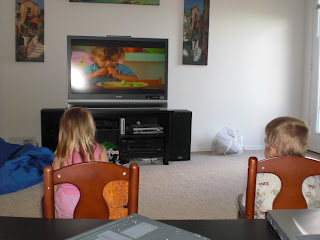
I would suggest this video for someone with a child between 2.5 and 5 years old who doesn't eat much produce. Ideally I would set the child(ren) at a table where they could see the tv and serve them a plate of one of the featured items. I would show the video for the featured item and one other item. I think if the child can mimic (Copy-Kids) what the child on the screen is doing at that exact moment, it would hold their attention longer.
Now for the giveaway details! There are two ways to enter to win a copy of this video.
#1 Comment on this post telling me what your child(ren)'s favorite type of produce is.
#2 Like Parenting With Research on facebook. Leave a second comment here letting me know you like me!
I will use random.org to select a winner on July 20th.
I was not paid for this review and all opinions are my own.
Copy-Kids was kind enough to give me a copy of their Eat Fruits and Vegetables video to review and give away to one of my readers.
The concept behind the video is positive peer pressure for eating healthy. Copy-Kids says the video is for ages 6 months to 5 years. The video itself is divided into 12 chapters each focusing on a different type of produce. They start by showing the vegetable (or fruit) and then show a few different children eating and enjoying each.
My kids will happily eat all of their fruits and vegetables, so we aren't the target audience, but I was interested from a child development perspective and based on the interest of my children. Here is our review.

Each chapter is 6-8 minutes long and they don't need to be played in any certain order, so you can just watch part at a time. This is great for short attention spans.
The kids eating the produce are all toddlers or preschoolers so they were able to get my kids attention.
It's like a longer version of a commercial for healthy foods. I wish it would be shown instead of the junk food commercials during kids tv shows.
There is part of the video specifically for parents, with a pediatrician offering many facts about healthy eating.
Sweet Son (34 months old)says, "It was great. People were eating foods. I like eating foods."
Selected as one of the 10 best Audio/Visuals for 2011 by Dr. Toy.
Approved by the USDA and added to their Education and Training Materials Database for pre-school nutrition.
Cons:
We don't let our kids watch TV before the age of 30 months, due to all of the associated problems. I know many people don't mind this, but it is odd for a pediatrician to recommend a video for ages younger than even the American Academy of Pediatrics recommends.
There is no plot or story line. This is just a video of kids eating their produce. It did not maintain my kids attention.
You can't put on the video and go take a shower because it will stop after 6-8 minutes.
Sweet Daughter (34 months old) says, "It was no good. People were just eating. That's all."

I would suggest this video for someone with a child between 2.5 and 5 years old who doesn't eat much produce. Ideally I would set the child(ren) at a table where they could see the tv and serve them a plate of one of the featured items. I would show the video for the featured item and one other item. I think if the child can mimic (Copy-Kids) what the child on the screen is doing at that exact moment, it would hold their attention longer.
Now for the giveaway details! There are two ways to enter to win a copy of this video.
#1 Comment on this post telling me what your child(ren)'s favorite type of produce is.
#2 Like Parenting With Research on facebook. Leave a second comment here letting me know you like me!
I will use random.org to select a winner on July 20th.
I was not paid for this review and all opinions are my own.
Sunday, March 20, 2011
TV and Computer Time for Babies
Before you read ahead and become offended, please read the disclaimer. Also, the photos used are cute, but in no way related to the post.

A few years before having kids I was fortunate enough to attend a conference about how the brain learns. The presenters are neuro-scientists and it was for educators. Basically we spent 3 days looking at fMRI and PET scans to test educational theories. I loved it. Some of the research supported what educators already knew, for example, kids who can rhyme learn to read earlier than kids who can't rhyme, but can recognize their letters. The brain scans show that rhyming develops the same pathway in the brain that will later be used for reading. Recognizing letters is a type of symbolic recognition and is handled by a completely different part of the brain. It's nice when everyone can agree.
One of the big topics discussed was TV and computer time for babies/children/teens. When sharing this research I'm most often told they got it wrong. The brain scans were obviously lying because parents/educators have another idea. I have had people get offended that I'm saying what is best isn't what they did or are doing. They react like I'm accusing them of child abuse. It's crazy and why I started this post suggesting you read the disclaimer.

Multiple research groups across the US, Canada, Europe, and Australia have all taken on this topic and their results have all shown the same thing. They took babies and set them in front of a television with a baby video on the tv. The kids sat staring at the TV and when the video ended some sat still staring, but many cried and seemed to want more. The brain scans showed a different story. The babies couldn't seem to make any sense out of what they were seeing and the constantly changing images were actually killing off some of the connections in the brain. It was slowly causing minor brain damage. This was only noticeable when reading the brain scans, but every time a baby was watching TV the same thing happened. Those connections didn't seem to ever come back.

Next the research teams tested 5 and 6 year old kids. They watched age appropriate educational videos. Once again the kids sat staring at the TV and got upset when it was over. They asked to watch more. The brain scans this time were different. The kids were learning from the shows. They were developing new connections and reinforcing ones that already existed.
Obviously something had changed. Here's where the real fun begins. There were two different theories. 1 Something changes in the brain chemistry in the first few years that causes this. 2 The type or content of the videos causes the difference.

Some of the research groups started narrowing it down based on age. They tested toddlers (16-20 months old) and it was still damaging. They tested 3 year olds (35-37 months) and it was beneficial. They tested 2 year olds (23-25 months) and it was harmful. Are you excited to see when the change happens yet? This is how I know I'm a nerd - I was on the edge of my seat wanting to hear every bit of this information. They tested kids who were exactly 30 months old (2.5 years) and it was beneficial. This research takes months to complete and this is where the story ends for now. They are still trying to narrow it down and see when the flip seems to happen. I am looking forward to hearing the new research, but until then our kids won't see any TV until they are at least 2.5 years old.

The other type of research is even more fascinating. This testing first proved it doesn't matter the content with kids under 2 years old, it's always harmful. They then looked at the benefits from different types of shows and computer games for the older (3-7 year olds) groups. There were many shocking discoveries.

First, the pacing of the program is the most important factor. If you watch a show and count the number of scene changes you will get an idea of the pacing. The greater the number, the worse it is for children. The most beneficial shows were paced as in life. The child's walking pace if they were going from room to room changing their own scene is actually the ideal pace of scene changes on TV. Cool, right? So shows with pacing like Mr. Rodgers are much better than the pacing of Baby Einstein videos.
Second, the content of the program and its impact on the brain was not what I expected. Shows that were thought of as violent (Power Rangers) were compared to shows that were thought of as non-violent (Berenstain Bears). Kids were more likely to have the positive feeling part of their brains light up for the violent shows than for the non-violent. Researchers sat down and watched each of the shows noting everything negative and everything positive. For example, every time someone was called a negative name, teased, pushed as well as every time someone was complimented, teamwork was demonstrated, and a helping hand was offered. Turns out that the non-violent shows often spent 25 of the 30 minute video dealing with a problem, i.e. kids not getting along, and 5 minutes resolving the problem. They had very high negative scores and very small positive ones by the end. The violent video spent 25 minutes talking about teamwork, helping and only 5 minutes actually fighting. They had high numbers of positive and small numbers of negative. While adults had been watching these shows for years, no one expected this type of correlation. With the help of a brain scan suddenly the way researchers look at videos completely changed.
Third, the researchers focused on the interactive nature of the video and included computer time as well. This did prove what was expected - the more interactive the better. TV shows that got kids up and dancing or answering questions that were posed were much better than the shows that kids just sat and watched. Computer games were rated equal to interactive videos (not better) when controlled for the pacing and programing. Interestingly, pacing was always the most important factor with programing being second and interactiveness falling into the third place.
This research is still continuing to see what else matters and where it will fall on its impact on children's brains.

When we do let our kids have screen time when they are 2.5, we will consider these things when choosing what they can view. We are of course trying to be perfect parents, but honestly that was out the window when they were just a few minutes old. More realistically, we are trying not to screw the kids up when it's preventable. I'm sure a few years from now they will come out with research that says we did many things wrong, but we have to take what we know and make decisions based on that and when in doubt, just go with our gut instinct.


A few years before having kids I was fortunate enough to attend a conference about how the brain learns. The presenters are neuro-scientists and it was for educators. Basically we spent 3 days looking at fMRI and PET scans to test educational theories. I loved it. Some of the research supported what educators already knew, for example, kids who can rhyme learn to read earlier than kids who can't rhyme, but can recognize their letters. The brain scans show that rhyming develops the same pathway in the brain that will later be used for reading. Recognizing letters is a type of symbolic recognition and is handled by a completely different part of the brain. It's nice when everyone can agree.
One of the big topics discussed was TV and computer time for babies/children/teens. When sharing this research I'm most often told they got it wrong. The brain scans were obviously lying because parents/educators have another idea. I have had people get offended that I'm saying what is best isn't what they did or are doing. They react like I'm accusing them of child abuse. It's crazy and why I started this post suggesting you read the disclaimer.

Multiple research groups across the US, Canada, Europe, and Australia have all taken on this topic and their results have all shown the same thing. They took babies and set them in front of a television with a baby video on the tv. The kids sat staring at the TV and when the video ended some sat still staring, but many cried and seemed to want more. The brain scans showed a different story. The babies couldn't seem to make any sense out of what they were seeing and the constantly changing images were actually killing off some of the connections in the brain. It was slowly causing minor brain damage. This was only noticeable when reading the brain scans, but every time a baby was watching TV the same thing happened. Those connections didn't seem to ever come back.

Next the research teams tested 5 and 6 year old kids. They watched age appropriate educational videos. Once again the kids sat staring at the TV and got upset when it was over. They asked to watch more. The brain scans this time were different. The kids were learning from the shows. They were developing new connections and reinforcing ones that already existed.
Obviously something had changed. Here's where the real fun begins. There were two different theories. 1 Something changes in the brain chemistry in the first few years that causes this. 2 The type or content of the videos causes the difference.

Some of the research groups started narrowing it down based on age. They tested toddlers (16-20 months old) and it was still damaging. They tested 3 year olds (35-37 months) and it was beneficial. They tested 2 year olds (23-25 months) and it was harmful. Are you excited to see when the change happens yet? This is how I know I'm a nerd - I was on the edge of my seat wanting to hear every bit of this information. They tested kids who were exactly 30 months old (2.5 years) and it was beneficial. This research takes months to complete and this is where the story ends for now. They are still trying to narrow it down and see when the flip seems to happen. I am looking forward to hearing the new research, but until then our kids won't see any TV until they are at least 2.5 years old.

The other type of research is even more fascinating. This testing first proved it doesn't matter the content with kids under 2 years old, it's always harmful. They then looked at the benefits from different types of shows and computer games for the older (3-7 year olds) groups. There were many shocking discoveries.

First, the pacing of the program is the most important factor. If you watch a show and count the number of scene changes you will get an idea of the pacing. The greater the number, the worse it is for children. The most beneficial shows were paced as in life. The child's walking pace if they were going from room to room changing their own scene is actually the ideal pace of scene changes on TV. Cool, right? So shows with pacing like Mr. Rodgers are much better than the pacing of Baby Einstein videos.
Second, the content of the program and its impact on the brain was not what I expected. Shows that were thought of as violent (Power Rangers) were compared to shows that were thought of as non-violent (Berenstain Bears). Kids were more likely to have the positive feeling part of their brains light up for the violent shows than for the non-violent. Researchers sat down and watched each of the shows noting everything negative and everything positive. For example, every time someone was called a negative name, teased, pushed as well as every time someone was complimented, teamwork was demonstrated, and a helping hand was offered. Turns out that the non-violent shows often spent 25 of the 30 minute video dealing with a problem, i.e. kids not getting along, and 5 minutes resolving the problem. They had very high negative scores and very small positive ones by the end. The violent video spent 25 minutes talking about teamwork, helping and only 5 minutes actually fighting. They had high numbers of positive and small numbers of negative. While adults had been watching these shows for years, no one expected this type of correlation. With the help of a brain scan suddenly the way researchers look at videos completely changed.
Third, the researchers focused on the interactive nature of the video and included computer time as well. This did prove what was expected - the more interactive the better. TV shows that got kids up and dancing or answering questions that were posed were much better than the shows that kids just sat and watched. Computer games were rated equal to interactive videos (not better) when controlled for the pacing and programing. Interestingly, pacing was always the most important factor with programing being second and interactiveness falling into the third place.
This research is still continuing to see what else matters and where it will fall on its impact on children's brains.

When we do let our kids have screen time when they are 2.5, we will consider these things when choosing what they can view. We are of course trying to be perfect parents, but honestly that was out the window when they were just a few minutes old. More realistically, we are trying not to screw the kids up when it's preventable. I'm sure a few years from now they will come out with research that says we did many things wrong, but we have to take what we know and make decisions based on that and when in doubt, just go with our gut instinct.

Subscribe to:
Posts (Atom)